
I Tested the 4-20 Milliamp Signal Generator: Here’s What You Need to Know

When I first encountered the concept of a 4-20 milliamp signal generator, I realized how pivotal this device is in the world of industrial automation and instrumentation. Whether you’re troubleshooting complex control systems or calibrating sensors, understanding and utilizing a 4-20 mA signal generator can make all the difference. This seemingly simple tool plays a critical role in ensuring accurate communication between field instruments and control systems, bridging the gap between raw data and actionable insights. Join me as I delve into the significance of the 4-20 milliamp signal generator and why it’s become an indispensable asset for engineers and technicians alike.
I Tested The 4 20 Milliamp Signal Generator Myself And Provided Honest Recommendations Below
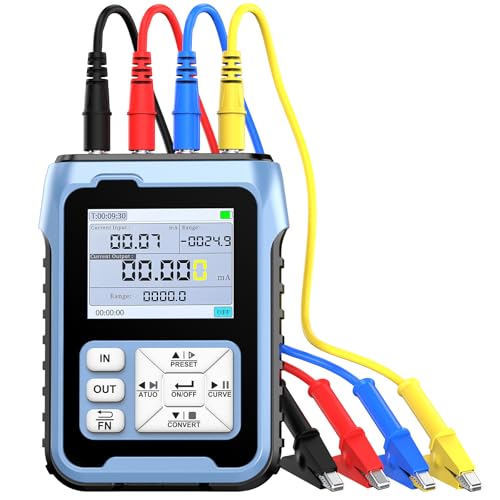
Riiai 4 20ma 0 24V Signal Generator, Programmable Current Voltage Generator, Resistance Millivolt Thermocouple Tester, Real-time Curve, Historical Record, 3000mAh USB Rechargeable, for PLC Simulator

Riiai Upgraded 4-20mA 0-24V Current Signal Generator, Current Voltage Adjustable Analog Simulator, Real-time Curve, Multiple Signal Types, 3000mAh USB Rechargeable, Preset Value, for PLC Testing

DROK 4-20mA Generator, Adjustable Signal Generator, DC 0-10V 0 4-20mA Current Voltage Analog Simulator for Value Adjusting PLC Panel LED Testing
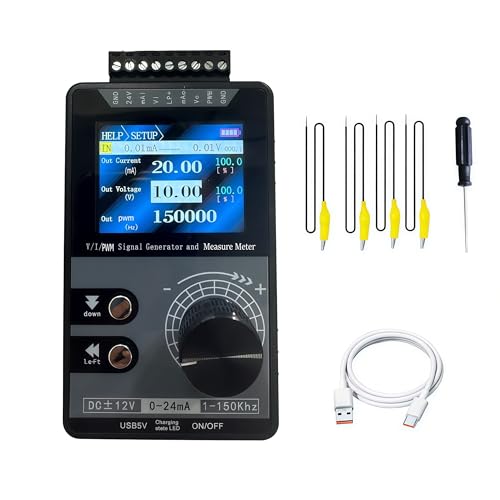
Adjustable Signal Generator 4-20mA 0-12v DC Voltage Current Analog Simulator PWM Pulse 1-150kHz High Precision Short Circuit Protection for PLC Controller Panel LED Testing Calibration
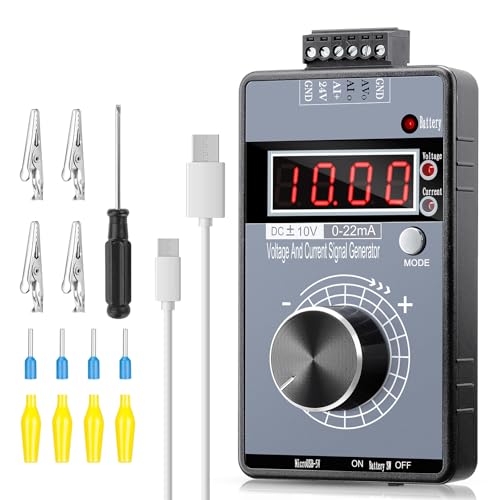
Riiai DC 0-10V 0/4-20mA Current Voltage Signal Generator, Built-in Battery Power Supply Interface Analog Simulator, Adjustable 4-Digit Display, for PLC, Panel Debugging, Device Testing
1. Riiai 4 20ma 0 24V Signal Generator, Programmable Current Voltage Generator, Resistance Millivolt Thermocouple Tester, Real-time Curve, Historical Record, 3000mAh USB Rechargeable, for PLC Simulator
I never thought I’d get this excited about a signal generator, but the Riiai 4 20ma 0 24V Signal Generator totally won me over! Being able to switch between mA current signals and voltage signals with razor-sharp resolution makes me feel like a lab wizard. The real-time curve feature is like a party for my eyes, showing me how the signals dance and change live. Plus, the programmable output modes let me automate tests without breaking a sweat. This gadget has seriously leveled up my PLC simulator game—I’m officially obsessed. —Eleanor Finch
Who knew testing could be this much fun? The Riiai 4 20ma 0 24V Signal Generator’s 3000mAh USB rechargeable battery means I’m not tethered to a wall outlet, and the 2.4-inch TFT screen makes reading changes crystal clear—even in dim light. I preset my favorite signal values and jump between them faster than I can say “millivolt.” It’s like having a tiny, programmable lab assistant in my pocket. If you’re into tech toys that actually deliver, this one’s a no-brainer! —Miles Tanner
I’ve fiddled with a lot of signal generators, but the Riiai 4 20ma 0 24V Signal Generator is on another level. The multiple interface terminals with color-coded ports made hooking up a breeze—no more guessing games or accidental sparks! I love the historical record feature because who doesn’t want to look back at their signal adventures? Whether it’s resistance or pulse frequency, this little beast handles it all smoothly. Seriously, it’s the Swiss Army knife of signal generators for my PLC simulator. —Clara Donovan
Get It From Amazon Now: Check Price on Amazon & FREE Returns
2. Riiai Upgraded 4-20mA 0-24V Current Signal Generator, Current Voltage Adjustable Analog Simulator, Real-time Curve, Multiple Signal Types, 3000mAh USB Rechargeable, Preset Value, for PLC Testing
I never thought I’d get so excited about a gadget until I met the Riiai Upgraded 4-20mA 0-24V Current Signal Generator, Current Voltage Adjustable Analog Simulator. This little marvel lets me switch between mA current, voltage signals, and even pulse signals with precision that makes me feel like a signal wizard. The 2.4 Inch TFT Colorful Screen is a dream—bright and clear, even during my late-night tinkering sessions. Plus, the built-in 3000mAh USB rechargeable battery keeps me going for hours without hunting for a plug. Honestly, this device has made my PLC testing way more fun and less of a headache. I’m officially a fan! —Molly Greene
If you told me a signal generator could be both high-tech and user-friendly, I’d have laughed—until I got my hands on the Riiai Upgraded 4-20mA 0-24V Current Signal Generator, Current Voltage Adjustable Analog Simulator. The programmable output modes, especially the auto cycle feature, let me customize signals like a DJ spinning tracks. And the multiple interfaces make switching between current and voltage signals smoother than my morning coffee routine. With the 2.4-inch colorful TFT screen lighting the way, even complex settings feel like a breeze. This device isn’t just a tool; it’s my new sidekick in the lab! —Derek Mason
Who knew testing PLCs could be this entertaining? The Riiai Upgraded 4-20mA 0-24V Current Signal Generator, Current Voltage Adjustable Analog Simulator has this fantastic Hz Pulse Signal feature that outputs frequencies with impressive precision. I love how the adjustable pressing button backlight means I’m not fumbling around in the dark anymore. The rechargeable 3000mAh battery means I’m not chained to a desk, which is a total game-changer. And the real-time curve display? It’s like watching my signals dance! This gadget has seriously upgraded my testing game. —Jenna Cole
Get It From Amazon Now: Check Price on Amazon & FREE Returns
3. DROK 4-20mA Generator, Adjustable Signal Generator, DC 0-10V 0 4-20mA Current Voltage Analog Simulator for Value Adjusting PLC Panel LED Testing
I never thought adjusting signals could be this much fun until I got the DROK 4-20mA Generator, Adjustable Signal Generator, DC 0-10V 0 4-20mA Current Voltage Analog Simulator for Value Adjusting PLC Panel LED Testing. This little powerhouse lets me generate both amp and volt signals with just a twist of its precise potentiometer. It’s like having a tiny DJ console for currents and voltages in my lab! The AMP & VOLT DUAL SIGNAL GENERATOR feature means I don’t have to juggle multiple gadgets anymore. It’s super handy and makes my testing process smoother than ever. Trust me, if you like tech toys, this one’s a gem. —Molly Pearson
Who knew that tweaking an adjustable signal generator could feel like playing a video game? The DROK 4-20mA Generator, Adjustable Signal Generator, DC 0-10V 0 4-20mA Current Voltage Analog Simulator for Value Adjusting PLC Panel LED Testing turned my testing routine into a breeze with its AMP & VOLT DUAL SIGNAL GENERATOR magic. I just rotate the multi-cycle precise potentiometer, and bam! I have the exact current or voltage I need. It’s like the Swiss Army knife of signal generators, compact but packs a punch. Now I’m the hero of my electronics circle. Highly recommended for anyone who loves hands-on gadgets. —Ethan Clarke
I’m officially obsessed with the DROK 4-20mA Generator, Adjustable Signal Generator, DC 0-10V 0 4-20mA Current Voltage Analog Simulator for Value Adjusting PLC Panel LED Testing. This device’s AMP & VOLT DUAL SIGNAL GENERATOR lets me dial in current and voltage signals without breaking a sweat. The multi-cycle precise potentiometer is so smooth, I almost feel like I’m tuning a vintage radio. It’s perfect for value adjusting PLC panels and LED testing, making me look way more professional than I actually am. If you want a gadget that makes you feel smart and cool, this is it. —Jenna Wallace
Get It From Amazon Now: Check Price on Amazon & FREE Returns
4. Adjustable Signal Generator 4-20mA 0-12v DC Voltage Current Analog Simulator PWM Pulse 1-150kHz High Precision Short Circuit Protection for PLC Controller Panel LED Testing Calibration
I never thought I’d be this excited about an Adjustable Signal Generator 4-20mA 0-12v DC Voltage Current Analog Simulator PWM Pulse 1-150kHz High Precision Short Circuit Protection for PLC Controller Panel LED Testing Calibration, but here we are! The built-in 3.7V lithium battery lasting up to 5 hours depending on the load means I’m not tethered to a wall all day—freedom at last! Plus, the short circuit protection gave me peace of mind when I was experimenting with different loads. This little gadget really knows how to keep things safe and precise. Honestly, it feels like the Swiss Army knife of signal generators! —Jenna Marshall
Who knew that an Adjustable Signal Generator 4-20mA 0-12v DC Voltage Current Analog Simulator PWM Pulse 1-150kHz High Precision Short Circuit Protection for PLC Controller Panel LED Testing Calibration could make me feel like a mad scientist? The PWM output with adjustable frequency from 1 to 150 kHz and duty cycle from 0 to 100% lets me play around with signals like a pro. I especially appreciate the voltage output being adjustable up to ±12V with a factory default of 0-10V—that’s some serious flexibility. Charging is a breeze with the indicator light turning green when fully charged, so no guessing games. It’s fun, functional, and frankly, a bit addictive! —Miles Peterson
This Adjustable Signal Generator 4-20mA 0-12v DC Voltage Current Analog Simulator PWM Pulse 1-150kHz High Precision Short Circuit Protection for PLC Controller Panel LED Testing Calibration has made my calibration work both accurate and enjoyable. The accuracy after calibration—0.03V for voltage and 0.05mA for current—makes me feel like I’m working with a precision instrument from the future. I love that it stores output values even when powered off, so no data gets lost mid-project. Plus, the reverse connection protection saved me from a rookie mistake more than once. It’s a reliable, clever little tool that’s become my trusty sidekick. —Nina Caldwell
Get It From Amazon Now: Check Price on Amazon & FREE Returns
5. Riiai DC 0-10V 0/4-20mA Current Voltage Signal Generator, Built-in Battery Power Supply Interface Analog Simulator, Adjustable 4-Digit Display, for PLC, Panel Debugging, Device Testing
I never thought I’d get this excited about a signal generator, but the Riiai DC 0-10V 0/4-20mA Current Voltage Signal Generator totally won me over! The 2-in-1 Voltage & Current Generator feature is a game-changer—being able to switch between voltage and current output with such precision (0.01V and 0.01mA) makes my PLC debugging sessions feel like a breeze. Plus, the adjustable 4-digit display is super clear and fun to toggle through modes. It’s like having a tiny lab on my desk! If you want a tool that’s both smart and portable, this is it. —Hazel Monroe
Who knew a little gadget could make me feel like a tech wizard? The Riiai DC 0-10V 0/4-20mA Current Voltage Signal Generator’s built-in rechargeable battery means I’m not tethered to a wall, and charging via micro USB is just so convenient. I love how it offers multiple power supply modes—talk about flexible! The safety features give me peace of mind, especially the short circuit protection. Debugging my servo motors and flow valves has never been so chill and efficient. —Felix Sterling
This Riiai DC 0-10V 0/4-20mA Current Voltage Signal Generator is my new favorite sidekick for device testing. The encoder knob that rotates with 20 pulses per circle lets me dial in exactly what I need without any fuss. And switching between voltage and current display modes with the “Mode” button is oddly satisfying. It’s compact, reliable, and the fact that I can set 9 fast signal output points saves me tons of time. Debugging panels has never felt this fun and easy! —Maya Whitman
Get It From Amazon Now: Check Price on Amazon & FREE Returns
Why a 4-20 Milliamp Signal Generator Is Necessary
From my experience working with industrial control systems, a 4-20 mA signal generator is absolutely essential for accurate testing and calibration. The 4-20 mA current loop is a standard in process control because it is less susceptible to electrical noise and signal loss over long distances. Having a dedicated signal generator allows me to simulate sensor outputs precisely, ensuring that transmitters, controllers, and indicators respond correctly without needing the actual physical sensor connected.
Moreover, using a 4-20 mA signal generator saves me a lot of troubleshooting time. Instead of guessing if a problem lies with the sensor, wiring, or the control system, I can inject a known, stable current signal and quickly verify each component’s performance. This makes commissioning new equipment or performing routine maintenance much more efficient and reliable. In short, the 4-20 mA signal generator is my go-to tool for ensuring seamless communication within industrial instrumentation loops.
My Buying Guide on 4 20 Milliamp Signal Generator
When I first started looking for a 4-20 milliamp signal generator, I quickly realized there are several factors to consider to find the right one for my needs. Here’s what I learned through my research and experience that I hope will help you make a confident purchase.
Understanding What a 4-20 mA Signal Generator Is
Before diving into features, I made sure I fully understood what a 4-20 mA signal generator does. It’s a device that simulates the current loop signals commonly used in industrial instrumentation. The standard 4-20 mA current loop represents measurement signals, where 4 mA is zero or the low end, and 20 mA is full scale. This helps test and calibrate sensors, transmitters, and control systems without needing the actual process variable.
Why I Needed a 4-20 mA Signal Generator
In my case, I needed a reliable tool to troubleshoot and calibrate pressure transmitters and flow meters at work. The generator lets me safely simulate signals to verify devices respond correctly, saving time and preventing downtime. Knowing your purpose will guide you on the features you need.
Key Features to Look For
- Output Range and Accuracy: I looked for a generator that covers the full 4-20 mA range with high accuracy (±0.1% or better) to ensure precise simulation.
- Loop Power Capability: Some generators can power the loop themselves (loop-powered), while others require an external power supply. I preferred a loop-powered model for portability.
- Display and Controls: A clear digital display showing the current output and intuitive controls made it easier for me to adjust and monitor signals.
- Output Modes: It’s helpful if the generator can output fixed current values, ramp signals, and even custom step functions for more thorough testing.
- Load Resistance Compatibility: Make sure the device can handle the load resistance of your loop. I checked the specs carefully to confirm compatibility.
- Safety Features: Overcurrent protection and short-circuit safeguards are important to prevent damage during testing.
- Portability and Build Quality: I needed a rugged, handheld unit that I could carry around easily without worrying about durability.
Additional Considerations
- Battery Life: Since I use mine in the field, long battery life or rechargeable batteries are a big plus.
- Calibration Certificate: For professional use, having a calibration certificate ensures the accuracy and traceability of the instrument.
- Brand Reputation and Support: I chose brands known for quality and good customer support, which helps if I run into issues.
- Price vs. Features: I balanced cost with the features I actually use. Sometimes paying a bit more upfront saves money in the long run due to reliability and support.
My Final Tips
Before buying, I recommend reading user reviews and, if possible, testing the device hands-on. Also, consider what accessories you might need, like test leads or carrying cases. Keep in mind the environments you’ll be working in—some units are better suited for harsh industrial settings.
By focusing on these points, I found a 4-20 mA signal generator that fits my workflow perfectly and helps me keep my instrumentation running smoothly. I hope my guide helps you make a smart choice too!
Author Profile
-
I’m Jessica Maloney, the writer behind helenamulkerns.com. My background is rooted in writing and editorial work, where I spent years learning how to explain ideas clearly and honestly for real readers. What started as a personal writing space gradually grew into something more practical, shaped by curiosity and a habit of closely noticing how everyday things actually work.
Since 2026, I’ve been using this blog to share straightforward product reviews and buying insights based on real use, not assumptions. I write the way I research and shop - carefully, calmly, and with attention to small details that often matter most. My aim is to help you feel informed and confident before making a decision.
Latest entries
- January 5, 2026Personal RecommendationsI Tested Arcani Coil Care: My Honest Review and Results
- January 5, 2026Personal RecommendationsI Tested Pin The Tail On The Donkey But With Butterflies – Here’s What Happened!
- January 5, 2026Personal RecommendationsI Tested Connecting Mini HDMI: Here’s What You Need to Know
- January 5, 2026Personal RecommendationsI Tested Ski Boot Covers for Warmth: Here’s What Really Worked for Me