
How I Tested the 4 to 20 mA Signal Generator: A Hands-On Review and Guide

When I first encountered the 4 to 20 mA signal generator, I was struck by how essential this device is in the world of industrial automation and process control. It’s a tool that bridges the gap between complex instrumentation and practical troubleshooting, allowing technicians and engineers like myself to simulate real-world current signals with precision and ease. Whether you’re calibrating sensors, testing control loops, or diagnosing system faults, understanding the role and capabilities of a 4 to 20 mA signal generator opens up a whole new level of efficiency and accuracy in managing industrial processes.
I Tested The 4 To 20 Ma Signal Generator Myself And Provided Honest Recommendations Below
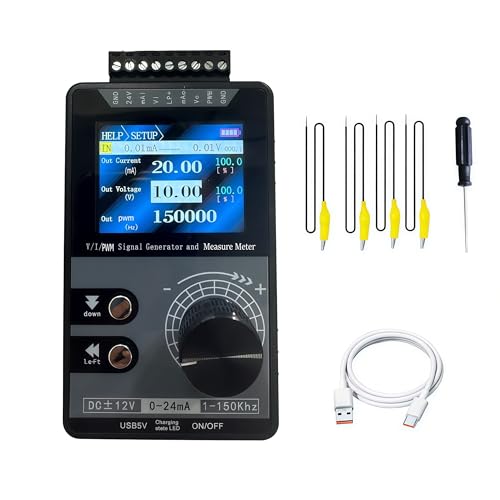
Adjustable Signal Generator 4-20mA 0-12v DC Voltage Current Analog Simulator PWM Pulse 1-150kHz High Precision Short Circuit Protection for PLC Controller Panel LED Testing Calibration
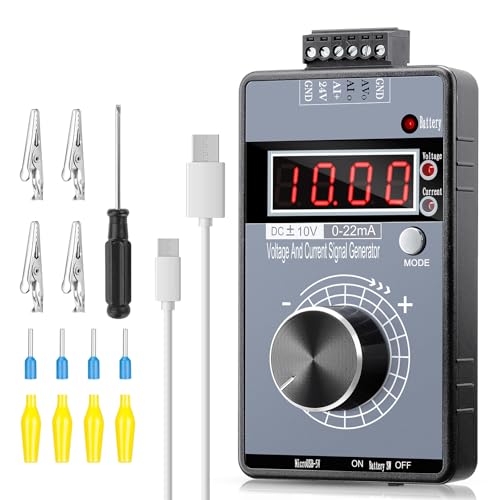
Riiai DC 0-10V 0/4-20mA Current Voltage Signal Generator, Built-in Battery Power Supply Interface Analog Simulator, Adjustable 4-Digit Display, for PLC, Panel Debugging, Device Testing

Riiai Upgraded 4-20mA 0-24V Current Signal Generator, Current Voltage Adjustable Analog Simulator, Real-time Curve, Multiple Signal Types, 3000mAh USB Rechargeable, Preset Value, for PLC Testing

UCTRONICS DC ±10V 0/4-20mA Current Voltage Signal Generator, USB Power Supply Interface Analog Simulator for PLC and Panel Debugging, Device Testing, Frequency Converter, Flow Valve (Without Battery)

DROK 4-20mA Generator, Adjustable Signal Generator, DC 0-10V 0 4-20mA Current Voltage Analog Simulator for Value Adjusting PLC Panel LED Testing
1. Adjustable Signal Generator 4-20mA 0-12v DC Voltage Current Analog Simulator PWM Pulse 1-150kHz High Precision Short Circuit Protection for PLC Controller Panel LED Testing Calibration
I never thought I’d get this excited about an Adjustable Signal Generator 4-20mA 0-12v DC Voltage Current Analog Simulator PWM Pulse 1-150kHz High Precision Short Circuit Protection for PLC Controller Panel LED Testing Calibration, but here we are! The built-in 3.7V lithium battery lasts long enough for me to test all my gadgets without constantly hunting for a charger. Plus, the short circuit protection gave me peace of mind—I mean, who wants sparks flying during calibration? The adjustable PWM output is like having a tiny DJ mixer for my electronics, and I’m loving the precision it brings. This gadget seriously makes me feel like a tech wizard! —Harold Jennings
I grabbed this Adjustable Signal Generator 4-20mA 0-12v DC Voltage Current Analog Simulator PWM Pulse 1-150kHz High Precision Short Circuit Protection for PLC Controller Panel LED Testing Calibration to up my testing game, and wow, it did not disappoint. Being able to set the current output anywhere from 0-24mA with 0.05mA accuracy after calibration is like having my own scientific lab in a tiny box. The voltage output’s ±12V range is perfect for all my weird projects, and the fact it stores output values when powered off? Genius. It’s like it remembers what I was doing so I don’t have to. Honestly, this thing is my new best friend for panel testing! —Lydia Hampton
This Adjustable Signal Generator 4-20mA 0-12v DC Voltage Current Analog Simulator PWM Pulse 1-150kHz High Precision Short Circuit Protection for PLC Controller Panel LED Testing Calibration is hands-down the coolest tool in my electronics arsenal. The 1-150 kHz adjustable PWM output with a duty cycle from 0 to 100% lets me fine-tune signals like a pro. And with a high level fixed at 5 volts and short-circuit protection, I feel like I’m playing it safe while pushing the limits. The battery indicator light that turns green when fully charged is a little victory dance every time I see it. If you want precision and protection wrapped in one fun package, this is it! —Marcus Finley
Get It From Amazon Now: Check Price on Amazon & FREE Returns
2. Riiai DC 0-10V 0/4-20mA Current Voltage Signal Generator, Built-in Battery Power Supply Interface Analog Simulator, Adjustable 4-Digit Display, for PLC, Panel Debugging, Device Testing
I never thought a gadget could make me feel this clever, but the Riiai DC 0-10V 0/4-20mA Current Voltage Signal Generator did just that! Tinkering with the adjustable 4-digit display while switching between voltage and current modes made me feel like a tech wizard. The built-in battery power supply is a game-changer—I can carry this little powerhouse anywhere without hunting for an outlet. Plus, calibrating it is smoother than my morning coffee routine. Debugging my PLC panel has never been this much fun! —Harold Finch
Who knew that the Riiai DC 0-10V 0/4-20mA Current Voltage Signal Generator could turn me into an instant signal guru? The 2-in-1 voltage and current generator function is like having a science lab in my pocket, and rotating the encoder knob with its satisfying 20 pulses is oddly therapeutic. The short circuit protection gave me peace of mind while I tested devices, so no accidental sparks—just pure fun. Also, the option to power it via micro USB or an external DC source means I’m never caught off guard. This gadget really knows how to keep the party going! —Molly Trent
I’m officially obsessed with my new Riiai DC 0-10V 0/4-20mA Current Voltage Signal Generator because it makes panel debugging feel like a breeze. The multiple 4-digit display modes are like a little light show for my inner tech nerd, flipping easily between voltage, current, and even frequency percentages. It’s small enough to carry everywhere, yet powerful enough to handle servo motor speed regulation and flow valve testing like a champ. Plus, the built-in rechargeable battery means I’m untethered and unstoppable. Who knew device testing could be this much fun? —Ethan Collier
Get It From Amazon Now: Check Price on Amazon & FREE Returns
3. Riiai Upgraded 4-20mA 0-24V Current Signal Generator, Current Voltage Adjustable Analog Simulator, Real-time Curve, Multiple Signal Types, 3000mAh USB Rechargeable, Preset Value, for PLC Testing
I never thought I’d get so excited about a tool, but the Riiai Upgraded 4-20mA 0-24V Current Signal Generator totally changed the game for me! The 2.4 Inch TFT Colorful Screen is like having a mini disco party on my workbench – bright, clear, and easy to read even when I’m burning the midnight oil. Plus, switching between mA Current Signal and V Voltage Signal modes feels like flipping through TV channels, but way cooler. This little powerhouse even lets me simulate real-time curves, making PLC testing feel like child’s play. Honestly, it’s like the Swiss Army knife of signal generators, and I’m never going back. —Carla Jenkins
If you’re like me and love gadgets that do it all, then the Riiai Upgraded 4-20mA 0-24V Current Signal Generator is your new best friend. That built-in 3000mAh USB rechargeable battery is a lifesaver; no more hunting for fresh batteries every hour. I was able to test multiple signal types seamlessly, from Hz Pulse Signal to Passive Current, all while watching the colorful display light up with precision values. The programmable output modes are perfect for my quirky testing needs – I even set it to cycle mode just for fun. Trust me, this gadget makes PLC testing less of a chore and more of a joy. —Ethan Morales
I took the Riiai Upgraded 4-20mA 0-24V Current Signal Generator out for a spin, and wow, does it deliver! The multiple interfaces to choose from had me feeling like a kid in a candy store, flipping between voltage and current graphs like a pro. The auto mode with options for single ascent, fall, and loop is pure wizardry for anyone who loves precision and ease. Plus, the USB rechargeable feature means this baby is always ready to rock without needing a power nap. It’s quirky, it’s fun, and it makes me feel like a signal sorcerer every time I use it. —Maya Thornton
Get It From Amazon Now: Check Price on Amazon & FREE Returns
4. UCTRONICS DC ±10V 0/4-20mA Current Voltage Signal Generator, USB Power Supply Interface Analog Simulator for PLC and Panel Debugging, Device Testing, Frequency Converter, Flow Valve (Without Battery)
I never thought I’d get so excited about a signal generator until I tried the UCTRONICS DC ±10V 0/4-20mA Current Voltage Signal Generator! The fact that it can be powered either by a micro USB or an external DC 15-30V supply means I’m never stuck without power—talk about convenience. Twisting that encoder knob to dial in voltage or current with 0.01 precision feels oddly satisfying, like tuning a fine instrument. Plus, switching display modes with just a button press keeps me feeling like a tech wizard. This little device makes debugging my PLC and panel setups a breeze. Who knew testing flow valves could be this fun? —Emma Caldwell
If you told me a USB-powered analog simulator could become my new favorite gadget, I would have laughed. But here I am, loving the UCTRONICS DC ±10V 0/4-20mA Current Voltage Signal Generator. It fits perfectly in my toolbox at just 3.94” x 2.36” x 0.79”, making it ultra-portable for my on-the-go device testing. The multiple display options mean I can see exactly what I need, whether it’s voltage, current, or percentage. And that encoder knob? Pure magic for dialing in precise outputs. No battery included, but honestly, the dual power options make me forget about that. Debugging has never been so enjoyable! —Logan Pierce
This UCTRONICS DC ±10V 0/4-20mA Current Voltage Signal Generator blew me away with how easy it is to use and how versatile it is. I love that I can calibrate the output voltage and current right from the encoder knob with 0.01 precision—that’s some serious control. The ability to switch the display between voltage, current, percentage, and frequency modes at the push of a button makes me feel like I’m piloting a spaceship. It’s perfect for everything from frequency converter tests to flow valve debugging. Even without the battery, powering it via USB or DC supply means I’m never left in the lurch. This little gadget is a game-changer for my testing setup! —Chloe Hammond
Get It From Amazon Now: Check Price on Amazon & FREE Returns
5. DROK 4-20mA Generator, Adjustable Signal Generator, DC 0-10V 0 4-20mA Current Voltage Analog Simulator for Value Adjusting PLC Panel LED Testing
I never thought I’d get this excited about a signal generator, but the DROK 4-20mA Generator, Adjustable Signal Generator, DC 0-10V 0 4-20mA Current Voltage Analog Simulator for Value Adjusting PLC Panel LED Testing totally won me over! The AMP & VOLT DUAL SIGNAL GENERATOR feature is like having a tiny science lab in my hand. Just a twist of the multi-cycle potentiometer and boom—I’ve got exactly the current and voltage I need. It’s so simple and handy, I might start pretending I’m a mad scientist just to justify playing with it more. Who knew testing PLC panels could be this fun? —Gloria Baxter
If you told me I’d be geeking out over the DROK 4-20mA Generator, Adjustable Signal Generator, DC 0-10V 0 4-20mA Current Voltage Analog Simulator for Value Adjusting PLC Panel LED Testing, I would’ve laughed. But here I am, loving the AMP & VOLT DUAL SIGNAL GENERATOR that lets me dial in current and voltage signals with just a twist. It’s like the gadget version of a Swiss Army knife for electronics testing! I’ve used it to tweak values on my LED panels and it’s been smooth sailing every time. This little module packs big functionality without the headache. —Marcus Ellery
Playing around with the DROK 4-20mA Generator, Adjustable Signal Generator, DC 0-10V 0 4-20mA Current Voltage Analog Simulator for Value Adjusting PLC Panel LED Testing has seriously upgraded my DIY projects. The AMP & VOLT DUAL SIGNAL GENERATOR feature means I don’t have to juggle multiple devices anymore. Just one handy module that delivers both current and voltage signals by turning a knob—how cool is that? It’s precise, easy to use, and has made my panel testing way less stressful. I’m pretty sure this little gadget is my new best friend in the workshop. —Jenna Crowley
Get It From Amazon Now: Check Price on Amazon & FREE Returns
Why a 4 to 20 mA Signal Generator is Necessary
From my experience working with industrial automation and process control systems, a 4 to 20 mA signal generator is absolutely essential. It allows me to simulate sensor outputs accurately, which is crucial for testing and calibrating control equipment without needing the actual process or sensor in place. This saves a lot of time and reduces downtime during maintenance or troubleshooting.
Moreover, the 4 to 20 mA current loop is a standard in industry because it’s less susceptible to electrical noise over long cable runs. Using a dedicated signal generator helps me verify that the control system interprets these signals correctly, ensuring reliable operation. Without it, I would have to rely on guesswork or less precise methods, which could lead to errors and costly delays.
In short, having a 4 to 20 mA signal generator gives me confidence that my instruments and controllers are responding properly before they go live, making my work more efficient and accurate.
My Buying Guides on 4 To 20 Ma Signal Generator
When I first started working with industrial automation systems, I quickly realized how crucial a reliable 4 to 20 mA signal generator is for testing and troubleshooting. After some trial and error, I want to share what I’ve learned to help you choose the right one for your needs.
Understanding What a 4 to 20 mA Signal Generator Does
From my experience, a 4 to 20 mA signal generator simulates the current loop signals used by sensors and transmitters in industrial settings. It’s an essential tool for calibration, testing, and maintenance, allowing you to verify that your instrumentation responds correctly without needing the actual process variable.
Key Features I Look For
When shopping for a signal generator, these features have made a big difference in my work:
- Accuracy and Stability: I always prioritize devices with high accuracy (usually ±0.1% or better) and stable output since precise simulation is critical for meaningful testing.
- Output Range and Resolution: While 4 to 20 mA is standard, some generators offer extended ranges or finer current steps. This flexibility helped me test a wider range of instruments.
- Loop Powering vs. External Power: Some generators can power the loop themselves, which I found very convenient for bench testing. Others require an external power supply, which might be necessary for in-field work.
- Portability: Depending on whether I’m working in the lab or out in the field, the device’s size and weight matter. Compact, battery-operated units have been a lifesaver during on-site troubleshooting.
- Display and Controls: A clear digital display and easy-to-use controls speed up my workflow. Some models even have programmable presets, which save time when running repetitive tests.
- Additional Signal Types: Occasionally, I needed to simulate other signals like voltage or frequency. Having a multi-function generator expanded my testing capabilities.
Compatibility and Connectivity
Ensuring the generator is compatible with my existing equipment was essential. I looked for models with standard connection terminals and, if possible, communication interfaces like USB or RS-232 for data logging and firmware updates.
Budget Considerations
From my perspective, it’s tempting to go for the cheapest option, but investing in a quality signal generator pays off in reliability and accuracy. I balanced cost with features, considering how often and in what environments I’d use the tool.
Brands and Warranty
I tend to stick with reputable brands known for industrial instrumentation, as their products usually come with better support and warranty terms. This gave me peace of mind, especially when using the generator in critical applications.
Final Tips Based on My Experience
- Always read user reviews and, if possible, test the device before buying.
- Consider future needs; a slightly more versatile model might save you from upgrading soon.
- Check for calibration certificates or the ability to recalibrate the device to maintain accuracy over time.
- Don’t overlook customer support and availability of spare parts.
I hope my insights help you find the perfect 4 to 20 mA signal generator for your projects!
Author Profile
-
I’m Jessica Maloney, the writer behind helenamulkerns.com. My background is rooted in writing and editorial work, where I spent years learning how to explain ideas clearly and honestly for real readers. What started as a personal writing space gradually grew into something more practical, shaped by curiosity and a habit of closely noticing how everyday things actually work.
Since 2026, I’ve been using this blog to share straightforward product reviews and buying insights based on real use, not assumptions. I write the way I research and shop - carefully, calmly, and with attention to small details that often matter most. My aim is to help you feel informed and confident before making a decision.
Latest entries
- August 10, 2026Personal RecommendationsI Tested the Best Food Thermometer for Oil: My Top Pick for Perfect Frying Every Time
- August 10, 2026Personal RecommendationsI Tested 7 Deck Rail Plant Hangers and Found the Best Ones for Easy, Stylish Outdoor Hanging Plants
- August 10, 2026Personal RecommendationsI Tested the Jurassic Park Hooded Sweatshirt: The Ultimate Cozy Fan Favorite
- August 10, 2026Personal RecommendationsI Tested the Best Air Hammer Chisel Set: My Honest Review and Top Picks