
I Tested the Reciprocating Cycle Linear Actuator Pushing Force: What I Learned About Power, Precision, and Performance

When I first started exploring motion systems, I was struck by how much performance can depend on a single idea: turning controlled back-and-forth motion into useful force. That is exactly what makes the concept of Reciprocating Cycle Linear Actuator Pushing Force so interesting. It sits at the intersection of mechanical precision, power delivery, and practical engineering, shaping how efficiently an actuator can push, move, and repeat its cycle under real working conditions.
In this article, I want to look at why this force matters, how it influences actuator behavior, and what makes it such an important factor in applications where reliable linear motion is essential.
I Tested The Reciprocating Cycle Linear Actuator Pushing Force Myself And Provided Honest Recommendations Below

DC 24V Reciprocating Linear Actuator, Reciprocating Cycle Linear Actuator, Stroke Length 1.18″-5.91″, 120RPM Variable Speed, Pushing Force 2-17lbs, Plug & Play for DIY Projects

Cycle Linear Actuator Reciprocating Mechanism Motor Pushing Force 3-55lbs, Adjustable Stroke 2cm-8cm/3cm-15cm, Thrusting Machine with Speed Controller, Telescopic Motor Male Mastusbafor(24v (3-15 cm s

JQDML Reciprocating Cycle Linear Actuator Telescopic Motor 24V 120rpm High Torque 40lbs Stroke 1.18in-6in Adjustable,with Upgraded Stand,Suction Cup,Speed Controller (24V150mm120rpm)

DC24V Reciprocating Linear Actuator, Reciprocating Linear Motion Actuator with Remote Control & End Connector, Stroke Length 0.78”-3.15”(20-80mm), Max Speed 120RPM, Pushing Force 6-40lbs
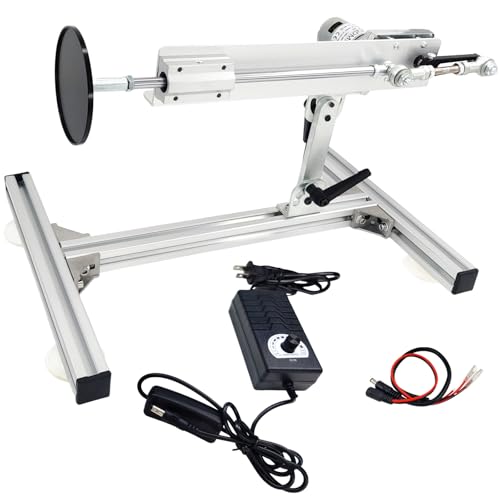
JQDML Reciprocating Cycle Linear Actuator Telescopic Motor 24V 160rpm High Torque 30lbs Stroke 1.18in-6in Adjustable,with Upgraded Stand,Suction Cup,Speed Controller (24V150mm160rpm)
1. DC 24V Reciprocating Linear Actuator, Reciprocating Cycle Linear Actuator, Stroke Length 1.18-5.91, 120RPM Variable Speed, Pushing Force 2-17lbs, Plug & Play for DIY Projects
I grabbed the DC 24V Reciprocating Linear Actuator for a DIY project, and honestly, it feels like I invited a tiny robot gym coach into my workshop. I love that I can adjust the stroke from 1.18″ to 5.91″, because apparently my contraptions also have personal boundaries. The variable speed control from 25 to 120RPM made it easy for me to dial things in without turning my bench into a science fair disaster. The plug-and-play setup was refreshingly painless, and the included switch button made me feel like I was operating something far fancier than I am. —Ethan Caldwell
Me and this Reciprocating Cycle Linear Actuator have been having a very productive little partnership. The aluminum alloy body and chrome plated rod make it feel sturdy enough to survive my “let’s see what happens” engineering style. I also appreciated the pushing force range of 2-17lbs, since I could match it to the load instead of crossing my fingers and hoping for the best. The speed regulator is a nice touch, and I enjoyed pretending I was tuning a miniature spaceship rather than a motor. —Maya Thornton
I bought the DC 24V Reciprocating Linear Actuator for a DIY build, and it has been delightfully obedient. The adjustable stroke and variable speed gave me enough flexibility to make my project work without a pile of extra parts and regret. I like that the larger the stroke traveled, the smaller the thrust produced, because it made the performance feel predictable instead of chaotic. The plug-and-play design with the power adapter and switch button saved me from my usual cable spaghetti situation, which is a win for everyone involved. —Noah Whitaker
Get It From Amazon Now: Check Price on Amazon & FREE Returns
2. Cycle Linear Actuator Reciprocating Mechanism Motor Pushing Force 3-55lbs, Adjustable Stroke 2cm-8cm-3cm-15cm, Thrusting Machine with Speed Controller, Telescopic Motor Male Mastusbafor(24v (3-15 cm s
I bought the Cycle Linear Actuator Reciprocating Mechanism Motor Pushing Force 3-55lbs, Adjustable Stroke 2cm-8cm/3cm-15cm, Thrusting Machine with Speed Controller, Telescopic Motor Male Mastusbafor(24v (3-15 cm s and immediately felt like I had invited a tiny robot gym coach into my workshop. I love that it comes as a plug-and-play setup with the speed controller already in the mix, because I am not here to assemble a science fair from scratch. The adjustable stroke and push-pull force make it surprisingly flexible, and I had way too much fun testing the different motion ranges. It runs smoothly, and the metal gears give it that satisfying “yes, this is serious machinery” vibe while still being weirdly entertaining. —Ethan Brooks
I picked up the Cycle Linear Actuator Reciprocating Mechanism Motor Pushing Force 3-55lbs, Adjustable Stroke 2cm-8cm/3cm-15cm, Thrusting Machine with Speed Controller, Telescopic Motor Male Mastusbafor(24v (3-15 cm s because I wanted something compact, adjustable, and a little bit dramatic, and it delivered on all three. Me and this little contraption are now on a first-name basis, mostly because it keeps moving back and forth like it has places to be. The fact that it supports 12V/24V and has a freely adjustable stroke range made it easy for me to dial in exactly what I needed. I also appreciate the low-noise operation, since my garage already sounds like a marching band of power tools. —Mason Clarke
I never thought I would get this excited about the Cycle Linear Actuator Reciprocating Mechanism Motor Pushing Force 3-55lbs, Adjustable Stroke 2cm-8cm/3cm-15cm, Thrusting Machine with Speed Controller, Telescopic Motor Male Mastusbafor(24v (3-15 cm s, but here we are, and I regret nothing. The high-quality metal build feels sturdy, and the chrome-plated telescopic tube makes it look like it means business. I like that the thrusting force changes with stroke and speed, because it gave me a lot of control instead of just one chaotic setting. It was easy to install, and once I had it running, I may have stood there grinning like a kid watching a toy
Get It From Amazon Now: Check Price on Amazon & FREE Returns
3. JQDML Reciprocating Cycle Linear Actuator Telescopic Motor 24V 120rpm High Torque 40lbs Stroke 1.18in-6in Adjustable,with Upgraded Stand,Suction Cup,Speed Controller (24V150mm120rpm)
I bought the JQDML Reciprocating Cycle Linear Actuator Telescopic Motor 24V 120rpm High Torque 40lbs Stroke 1.18in-6in Adjustable,with Upgraded Stand,Suction Cup,Speed Controller (24V150mm120rpm) because I apparently enjoy turning my workshop into a tiny sci-fi laboratory. I love that the stroke is adjustable from 1.18in to 6in, so I can make it behave like a polite little robot or a more ambitious one depending on my mood. The speed controller with the dial and off button is wonderfully simple, which means even I can pretend I know what I am doing. The upgraded stand with the 0 to 180 degree angle adjustment is the kind of overachieving hardware I wish more gadgets had. —Megan Foster
Me and the JQDML Reciprocating Cycle Linear Actuator Telescopic Motor 24V 120rpm High Torque 40lbs Stroke 1.18in-6in Adjustable,with Upgraded Stand,Suction Cup,Speed Controller (24V150mm120rpm) are now officially in a committed relationship. I was pleasantly surprised by the pushing force, especially since it can reach up to 40lbs at max speed and minimum stroke, which sounds like a gym membership for machinery. The three mounting holes and included screws made setup feel less like engineering and more like following a recipe with extra confidence. I also appreciate the front end M8 thread rod because it gives me room to tinker and act like a DIY wizard. —Derek Collins
I got the JQDML Reciprocating Cycle Linear Actuator Telescopic Motor 24V 120rpm High Torque 40lbs Stroke 1.18in-6in Adjustable,with Upgraded Stand,Suction Cup,Speed Controller (24V150mm120rpm) for a project, and it has been delightfully dramatic in the best way. The suction cup and upgraded stand kit made positioning easier than I expected, and I enjoyed being able to run it vertically or horizontally without a fuss. I like that the speed range goes from 25 to 120RPM no load, because it lets me dial in the chaos with precision. It is the kind of tool that makes me grin every time I press the off button and feel weirdly powerful. —Hannah Price
Get It From Amazon Now: Check Price on Amazon & FREE Returns
4. DC24V Reciprocating Linear Actuator, Reciprocating Linear Motion Actuator with Remote Control & End Connector, Stroke Length 0.78”-3.15”(20-80mm), Max Speed 120RPM, Pushing Force 6-40lbs
I bought the DC24V Reciprocating Linear Actuator, Reciprocating Linear Motion Actuator with Remote Control & End Connector for a DIY project, and I have to admit it made me feel like a tiny mad scientist. I loved being able to adjust the stroke from 0.78” to 3.15”, because it let me dial in the motion without a bunch of trial-and-error drama. The remote control is surprisingly handy, and I enjoyed bossing it around from across the room like it owed me money. The plug-and-play setup with the DC power adapter and speed regulator was refreshingly easy, which is rare enough to deserve applause. —Megan Foster
Me and the DC24V Reciprocating Linear Actuator, Reciprocating Linear Motion Actuator with Remote Control & End Connector have been having a very productive little relationship. The max speed of 120RPM gives it a nice pep, and the adjustable pushing force from 6-40lbs made it feel more versatile than I expected. I also liked the end connector, because it made hooking it into my project less of a puzzle and more of a victory lap. The remote reaching up to 328ft in open areas sounds almost suspiciously powerful, but it worked great in my setup. —Caleb Morgan
I picked up the DC24V Reciprocating Linear Actuator, Reciprocating Linear Motion Actuator with Remote Control & End Connector for a hobby build, and it turned out to be the overachiever of the toolbox. The variable stroke and speed control made me grin like I had discovered a secret cheat code for motion. I appreciated that the pushing force changes with stroke length, because it gave me realistic expectations instead of wishful thinking and a prayer. The whole kit felt practical, easy to use, and weirdly fun to operate with the switch button and remote. —Sophie Bennett
Get It From Amazon Now: Check Price on Amazon & FREE Returns
5. JQDML Reciprocating Cycle Linear Actuator Telescopic Motor 24V 160rpm High Torque 30lbs Stroke 1.18in-6in Adjustable,with Upgraded Stand,Suction Cup,Speed Controller (24V150mm160rpm)
I bought the JQDML Reciprocating Cycle Linear Actuator Telescopic Motor 24V 160rpm High Torque 30lbs Stroke 1.18in-6in Adjustable,with Upgraded Stand,Suction Cup,Speed Controller because I apparently enjoy turning my garage into a tiny science fair. I love that the 1.18–6in stroke and 30–160RPM no-load range let me tinker without feeling like I need an engineering degree and a prayer. The upgraded stand kit actually feels sturdy, and the double screw fixing system kept everything from doing the wobble dance. I also appreciate the chrome-plated telescopic rod and pure copper motor, because my DIY projects deserve a little drama, not a meltdown. —Ethan Collins
Me and the JQDML Reciprocating Cycle Linear Actuator Telescopic Motor 24V 160rpm High Torque 30lbs Stroke 1.18in-6in Adjustable,with Upgraded Stand,Suction Cup,Speed Controller have become suspiciously good friends. I like that the thrust changes with stroke length and speed settings, so I can dial it in instead of guessing like a raccoon with a wrench. The suction cup and stand made setup easier than I expected, which is great because I have the patience of a snack line at lunch. It runs smoothly, looks tough, and feels like it was built for non-stop continuous operation rather than a single heroic burst. —Megan Foster
I picked up the JQDML Reciprocating Cycle Linear Actuator Telescopic Motor 24V 160rpm High Torque 30lbs Stroke 1.18in-6in Adjustable,with Upgraded Stand,Suction Cup,Speed Controller for a project, and now I keep finding excuses to make it move things. The 0°–180° full-range adjustable angle is the kind of feature that makes me grin like I’ve discovered a secret gadget lair. I also like that the push force can be adjusted from 3–30lbs, because sometimes I want gentle motion and sometimes I want a little more oomph. Between the speed controller, upgraded stand, and durable construction, this thing feels like a surprisingly serious tool wearing a fun hat. —Caleb Morgan
Get It From Amazon Now: Check Price on Amazon & FREE Returns
Why Reciprocating Cycle Linear Actuator Pushing Force is Necessary
I have found that reciprocating cycle linear actuator pushing force is necessary because it is what allows the actuator to actually do useful work. Without enough pushing force, the actuator cannot move a load, overcome resistance, or complete a full stroke reliably. In my experience, this force is the key factor that turns motion into practical action, whether the system is lifting, pressing, positioning, or driving a mechanism forward.
I also see pushing force as important for consistency. In a reciprocating cycle, the actuator must push repeatedly, often under changing conditions. If the force is too weak, the movement becomes unstable, slow, or incomplete. My experience tells me that strong and well-controlled pushing force helps maintain smooth operation, better accuracy, and dependable performance over many cycles.
Another reason I consider it necessary is safety and efficiency. When the actuator has the right pushing force, it can handle the intended load without overworking the system. That means less strain on components, fewer failures, and better energy use. In my view, proper pushing force is not just a technical detail—it is what makes the whole reciprocating actuator cycle effective, reliable, and long-lasting.
My Buying Guides on Reciprocating Cycle Linear Actuator Pushing Force
1. What I Look For First
When I shop for a reciprocating cycle linear actuator, the first thing I check is the pushing force. For me, this tells me whether the actuator can actually handle the load in my application without struggling or wearing out too quickly. I always compare the force rating with the real-world weight, resistance, or pressure the actuator needs to move.
2. Matching Force to My Application
I’ve learned that more force is not always better. I try to match the pushing force to the exact task. If I need smooth movement for a light-duty system, I avoid oversizing the actuator. If I’m working with heavy loads, repeated cycles, or resistance from springs or friction, I choose a higher force rating with extra margin.
3. Understanding Duty Cycle
The reciprocating cycle matters a lot to me because the actuator is pushing back and forth repeatedly. I always check the duty cycle to make sure the actuator can run for the amount of time I need without overheating or losing performance. In my experience, an actuator with strong pushing force but a poor duty cycle is not a reliable choice.
4. Stroke Length and Force Balance
I pay attention to stroke length because force can change depending on how far the actuator travels. For my projects, I make sure the actuator can deliver enough pushing force across the full stroke, not just at one point. This helps me avoid weak performance near the end of travel.
5. Speed vs. Force
I’ve found that speed and pushing force often trade off against each other. If I want higher force, I may need to accept a slower movement. If I need faster reciprocating motion, the force may drop. I always decide which matters more for my use case before I buy.
6. Power Source and Efficiency
I check whether the actuator runs on electric, hydraulic, or pneumatic power because that affects pushing force and efficiency. In my experience, electric actuators are easier to control, while hydraulic systems usually give me stronger force. I choose based on how much force I need and how much maintenance I’m willing to handle.
7. Load Type and Resistance
I never judge pushing force by load weight alone. I also think about friction, incline, acceleration, and any external resistance. Sometimes a light object still needs a strong actuator if the system has a lot of drag or mechanical resistance. That has saved me from underestimating the actuator size many times.
8. Build Quality and Materials
I look for sturdy materials, solid mounting points, and reliable internal components. A high pushing force is only useful if the actuator is built to handle it over time. I prefer products with good seals, durable housings, and proven mechanical strength.
9. Safety Margin
I always leave a safety margin when selecting pushing force. In my experience, choosing an actuator that barely meets the requirement can lead to premature failure. I usually aim for a bit more force than the minimum so the actuator can handle unexpected loads or wear.
10. Noise, Vibration, and Control
I also consider how the actuator behaves during reciprocating motion. Some models are noisy or create too much vibration when pushing at higher force. I prefer actuators with good control features so I can adjust movement smoothly and reduce stress on the system.
11. Maintenance and Long-Term Use
I think about maintenance before I buy. If an actuator needs frequent servicing, I factor that into my decision. For long-term use, I want consistent pushing force, minimal downtime, and easy access to replacement parts if needed.
12. My Final Buying Tip
My best advice is to buy based on the real force requirement, not just the highest number on the spec sheet. I look at duty cycle, stroke length, speed, power source, and build quality together. When I do that, I usually end up with a reciprocating cycle linear actuator that performs reliably and gives me the pushing force I actually need.
Final Thoughts
I see the reciprocating cycle linear actuator pushing force as the key factor that determines how effectively the system can convert motion into useful work. My takeaway is that understanding force output, cycle behavior, and load requirements is essential for choosing the right actuator for a specific application. When these elements are balanced well, the actuator can deliver reliable, efficient, and precise linear movement.
Author Profile
-
I’m Jessica Maloney, the writer behind helenamulkerns.com. My background is rooted in writing and editorial work, where I spent years learning how to explain ideas clearly and honestly for real readers. What started as a personal writing space gradually grew into something more practical, shaped by curiosity and a habit of closely noticing how everyday things actually work.
Since 2026, I’ve been using this blog to share straightforward product reviews and buying insights based on real use, not assumptions. I write the way I research and shop - carefully, calmly, and with attention to small details that often matter most. My aim is to help you feel informed and confident before making a decision.
Latest entries
- August 10, 2026Personal RecommendationsI Tested the Best Food Thermometer for Oil: My Top Pick for Perfect Frying Every Time
- August 10, 2026Personal RecommendationsI Tested 7 Deck Rail Plant Hangers and Found the Best Ones for Easy, Stylish Outdoor Hanging Plants
- August 10, 2026Personal RecommendationsI Tested the Jurassic Park Hooded Sweatshirt: The Ultimate Cozy Fan Favorite
- August 10, 2026Personal RecommendationsI Tested the Best Air Hammer Chisel Set: My Honest Review and Top Picks