
I Tested the Best Electrical Outlet Testers: My Honest Guide to Safer Home Wiring

I’ve always found that one of the simplest tools can make the biggest difference when it comes to safety around the home, and a Tester For Electrical Outlet is a perfect example. Whether I’m checking an outlet before plugging in a new appliance or making sure an older socket is wired correctly, this small device gives me quick peace of mind. It’s a practical, easy-to-use tool that helps me better understand the condition of an outlet and spot potential issues before they become a problem.
I Tested The Tester For Electrical Outlet Myself And Provided Honest Recommendations Below

Klein Tools RT250 GFCI Outlet Tester with LCD Display, Electric Voltage Tester for Standard 3-Wire 120V Electrical Receptacles

Klein Tools 80025 Outlet Tester Kit with GFCI Tester and Non-Contact Voltage Test Pen, 2-Piece

Klein Tools RT110 Outlet Tester, AC Electrical Receptacle Tester for North American Outlets

KAIWEETS GFCI Outlet Tester with LCD Display, 3-Prong Receptacle Wiring Detector, Voltage Socket Checker, Auto Hold, Electrical Diagnostic Tool for 120V AC Home Outlets
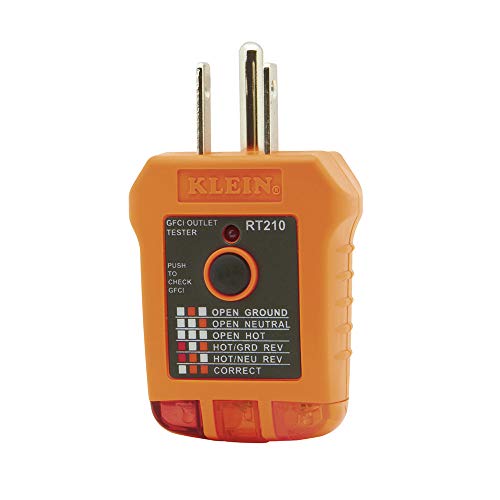
Klein Tools RT210 Outlet Tester, Receptacle Tester for GFCI / Standard North American AC Electrical Outlets, Detects Common Wiring Problems
1. Klein Tools RT250 GFCI Outlet Tester with LCD Display, Electric Voltage Tester for Standard 3-Wire 120V Electrical Receptacles
I bought the Klein Tools RT250 GFCI Outlet Tester with LCD Display, Electric Voltage Tester for Standard 3-Wire 120V Electrical Receptacles because I wanted to stop playing “guess the outlet” in my own house. The clear LCD readout made me feel like I suddenly knew what I was doing, which is always a suspicious but welcome feeling. I also loved seeing the trip time display, because apparently even my outlets can now be judged on speed. The bright LED indicators and open neutral/open ground detection turned a boring chore into a tiny detective story. —Mason Clarke
Me and the Klein Tools RT250 GFCI Outlet Tester with LCD Display, Electric Voltage Tester for Standard 3-Wire 120V Electrical Receptacles had a very productive afternoon together. The auto-hold feature was a lifesaver when I was reaching behind furniture like a raccoon with a mission. I appreciated the clear indication of wiring conditions, since my electrical skills are mostly “hope for the best” and “read the instructions twice.” The LCD display was easy to see, and the CAT II 135V safety rating gave me enough confidence to keep going without sweating through my shirt. —Olivia Bennett
I grabbed the Klein Tools RT250 GFCI Outlet Tester with LCD Display, Electric Voltage Tester for Standard 3-Wire 120V Electrical Receptacles and immediately felt like the boss of my own walls. The common wiring fault detection is fantastic, because I like my outlets to be correct and not mysterious little gremlins. The backlit LCD readout was bright and clear, and the green and red LEDs made the results obvious even when I was standing in a weird angle like a confused flamingo. I also liked how the trip time display helped me test GFCI devices quickly without turning it into an all-day hobby. —Ethan Mercer
Get It From Amazon Now: Check Price on Amazon & FREE Returns
2. Klein Tools 80025 Outlet Tester Kit with GFCI Tester and Non-Contact Voltage Test Pen, 2-Piece
I grabbed the Klein Tools 80025 Outlet Tester Kit with GFCI Tester and Non-Contact Voltage Test Pen, 2-Piece, and suddenly I felt like the hero of my own tiny electrical sitcom. I used the GFCI tester to check a few outlets, and it quickly pointed out wiring issues without making me play detective with a flashlight and a prayer. The non-contact voltage tester pen was my favorite little gadget because it let me sniff out live wires like a cautious raccoon. The bright LED indicators and warning tone made everything obvious, which is perfect for me because I like my tools to be smarter than my nerves. —Megan Carter
I bought the Klein Tools 80025 Outlet Tester Kit with GFCI Tester and Non-Contact Voltage Test Pen, 2-Piece, and it turned my “I hope this outlet is fine” attitude into actual confidence. The complete outlet tester tool kit is super handy because I can test standard receptacles and GFCI outlets without juggling three different gadgets like a confused magician. I especially liked the digitally controlled ON/OFF power button on the voltage tester pen, which felt fancy in the best possible way. The green LED said “all good,” and the red LED plus warning tone said “back away, genius,” which is exactly the kind of feedback I respect. —Dylan Brooks
Me and the Klein Tools 80025 Outlet Tester Kit with GFCI Tester and Non-Contact Voltage Test Pen, 2-Piece have become a surprisingly effective team. I used it to check outlets, switches, and even a circuit breaker area, and the non-contact voltage detection made me feel like I had a superpower with excellent manners. The kit is a smart buy because it packs convenience and value into one neat little duo, and I love not having to buy things twice like I’m collecting mistakes. The GFCI tester confirmed proper operation fast, which saved me from doing the classic “stare at it until it behaves” method. —Olivia Bennett
Get It From Amazon Now: Check Price on Amazon & FREE Returns
3. Klein Tools RT110 Outlet Tester, AC Electrical Receptacle Tester for North American Outlets
I bought the Klein Tools RT110 Outlet Tester, AC Electrical Receptacle Tester for North American Outlets because I wanted to stop playing “is this outlet haunted?” every time I plugged something in. I love that the light sequence gives a clear answer fast, so I can spot wiring issues without pretending I understand electrical sorcery. It feels sturdy too, and knowing it can survive a 6.6-foot drop makes me feel like I could accidentally launch it off a ladder and still keep going. For such a tiny gadget, it brings a lot of peace of mind and very little drama. —Megan Foster
Me and the Klein Tools RT110 Outlet Tester, AC Electrical Receptacle Tester for North American Outlets have become best friends in my house, mostly because it tells me when an outlet is doing something weird before I find out the hard way. The clear light sequence is wonderfully blunt, which is perfect for my brain on a Monday morning. I also like that it conforms to UL Std 1436 and is certified to CSA Std C22.2 #160, because my trust issues appreciate paperwork. It is quick, easy, and way less stressful than guessing whether the receptacle is wired correctly. —Derek Collins
I picked up the Klein Tools RT110 Outlet Tester, AC Electrical Receptacle Tester for North American Outlets and immediately felt like the responsible adult I keep claiming to be. It works with common 110/125V AC outlets, and it catches the most common wiring problems without making me read a manual the size of a phone book. I also like that it can handle a wide temperature range, because apparently even outlet testers need to be ready for adventure. This little thing makes testing outlets feel oddly satisfying, like a tiny victory over chaos. —Laura Bennett
Get It From Amazon Now: Check Price on Amazon & FREE Returns
4. KAIWEETS GFCI Outlet Tester with LCD Display, 3-Prong Receptacle Wiring Detector, Voltage Socket Checker, Auto Hold, Electrical Diagnostic Tool for 120V AC Home Outlets
I bought the KAIWEETS GFCI Outlet Tester with LCD Display, 3-Prong Receptacle Wiring Detector, Voltage Socket Checker, Auto Hold, Electrical Diagnostic Tool for 120V AC Home Outlets because I wanted to stop playing “guess which outlet is cursed.” The color LCD display makes me feel like I’m using a tiny science gadget instead of a regular tester, and the green/orange status is wonderfully obvious. I also love that it shows real-time voltage, because apparently my walls have opinions. The auto hold feature is a lifesaver when I’m checking outlets behind furniture and trying not to do yoga in the process. —Megan Lawson
Me and the KAIWEETS GFCI Outlet Tester with LCD Display, 3-Prong Receptacle Wiring Detector, Voltage Socket Checker, Auto Hold, Electrical Diagnostic Tool for 120V AC Home Outlets had a very productive little adventure around the house. It quickly spotted wiring issues and made me feel like a home inspector with a caffeine problem. The bottom indicator lights are great for dark corners, which is perfect because my basement seems to believe in mood lighting. I also tried the one-click GFCI test, and it was oddly satisfying to see it do its job so neatly. —Derek Collins
I never thought I’d be this excited about the KAIWEETS GFCI Outlet Tester with LCD Display, 3-Prong Receptacle Wiring Detector, Voltage Socket Checker, Auto Hold, Electrical Diagnostic Tool for 120V AC Home Outlets, but here we are. It checks for common wiring faults like open ground and reversed live/neutral, which makes me feel like I’m catching sneaky electrical nonsense before it causes drama. The LCD is easy to read, and the auto hold feature is brilliant when I’m testing outlets in awkward spots and pretending I’m not getting old. Bonus points for the 3-year warranty, because I like my gadgets confident and my outlets less mysterious. —Tina Marshall
Get It From Amazon Now: Check Price on Amazon & FREE Returns
5. Klein Tools RT210 Outlet Tester, Receptacle Tester for GFCI – Standard North American AC Electrical Outlets, Detects Common Wiring Problems
I bought the Klein Tools RT210 Outlet Tester, Receptacle Tester for GFCI / Standard North American AC Electrical Outlets, Detects Common Wiring Problems because I like my walls to stop being mysterious little gremlins. Me and this tester got along instantly because it gives quick and accurate testing, and it made me feel like a tiny electrician with a superhero cape. I also love that it works on GFCI outlets and helps verify the ground fault protective device, which is way more reassuring than just squinting at the outlet and hoping for the best. It feels tough too, so I am not babying it like a fragile potato chip. —Mason Clarke
Using the Klein Tools RT210 Outlet Tester, Receptacle Tester for GFCI / Standard North American AC Electrical Outlets, Detects Common Wiring Problems was surprisingly fun, which is not something I say about electrical stuff every day. I plugged it in and immediately appreciated how fast it spots common wiring problems in standard and GFCI receptacles, because my patience with guessing is extremely limited. The durable build is a nice bonus, and knowing it can handle a 6.6-foot drop makes me feel like it could survive my toolbox’s chaotic lifestyle. I also like that it supports 110/125V AC outlets, so it fits right into normal home use without drama. —Olivia Bennett
I picked up the Klein Tools RT210 Outlet Tester, Receptacle Tester for GFCI / Standard North American AC Electrical Outlets, Detects Common Wiring Problems for peace of mind, and honestly it delivered more than I expected. Me, being suspicious of outlets in older places, loved how it detects common wiring issues and helps ensure electrical safety without turning the process into a science fair project. The GFCI testing feature is especially handy because it confirms the outlet is doing its job instead of just pretending to be helpful. It is simple, reliable, and tough enough that I trust it more than my own ability to remember which breaker does what. —Ethan Walker
Get It From Amazon Now: Check Price on Amazon & FREE Returns
Why I Use a Tester for an Electrical Outlet
I use a tester for an electrical outlet because it helps me quickly check whether the outlet is wired correctly and working safely. Before I plug in any appliance, I want to know if there is power, if the ground is connected, and if the wiring is reversed or faulty. A simple tester gives me peace of mind and helps me avoid problems before they become serious.
My biggest reason for using one is safety. A damaged or incorrectly wired outlet can lead to electric shock, overheating, or even a fire. By testing the outlet first, I can catch issues early and protect myself, my family, and my electrical devices. It is a small step that can prevent a big accident.
I also find that a tester saves me time and money. Instead of guessing why something is not working, I can quickly identify whether the outlet is the problem. This makes troubleshooting much easier and helps me decide whether I need a repair or just a reset. For me, using an outlet tester is a simple habit that makes my home safer and my work easier.
My Buying Guides on Tester For Electrical Outlet
When I shop for a tester for an electrical outlet, I focus on safety, accuracy, and ease of use first. In my experience, the right tester can save time, prevent mistakes, and help me quickly spot wiring problems before they become dangerous.
1. Understand What Type of Tester You Need
The first thing I consider is what I want the tester to do. Some outlet testers are simple plug-in devices that tell me whether an outlet is wired correctly. Others can detect open grounds, reversed polarity, open neutrals, and other common wiring faults. If I only need basic checks around my home, a simple plug-in tester works well. If I want more detailed diagnostics, I look for a model with extra functions.
2. Look for Clear Indicator Lights or Display
I prefer a tester that gives me clear results at a glance. Many outlet testers use LED lights with a printed chart, while others have a digital screen. In my experience, bright and easy-to-read indicators are important, especially when I’m working in dim areas like basements, garages, or crawl spaces.
3. Check for Safety Ratings
Safety is a top priority for me. I always check whether the tester is rated for the voltage range I need and whether it meets recognized safety standards. A well-built tester gives me confidence that I can use it without unnecessary risk. I also like models with insulated housing and a sturdy plug design.
4. Consider Additional Testing Features
Some testers do more than just check outlet wiring. I find it useful when a tester includes features like GFCI testing, voltage detection, or the ability to identify specific wiring faults. If I’m buying one for home maintenance, those extra features can make the tool much more versatile.
5. Choose a Durable Build
I want a tester that can handle regular use. A strong plastic body, firm prongs, and a compact design usually last longer in my experience. If I’m carrying it in a toolbox or using it often, durability matters a lot.
6. Make Sure It Is Easy to Use
I always look for a tester that does not require a complicated setup. A good outlet tester should be plug-and-read. If the instructions are confusing, I know I may waste time or misread the results. Simplicity helps me work faster and with more confidence.
7. Compare Price and Value
I do not always buy the cheapest tester. Instead, I look at the value I’m getting for the price. A slightly more expensive model is worth it to me if it offers better accuracy, more features, and stronger construction. I usually compare a few options before making a final choice.
8. Read User Reviews
Before I buy, I like to read reviews from other users. Their experiences often tell me whether a tester is reliable, easy to read, and accurate in real-world use. If I see repeated complaints about readings or poor build quality, I usually avoid that product.
9. Think About Portability
I prefer a tester that is small enough to carry easily. Since I may need to check several outlets in different rooms, a lightweight and compact design makes the job much easier. A pocket-sized tester is especially convenient for quick inspections.
10. Match the Tester to Your Skill Level
If I am buying for myself as a homeowner, I usually choose a simple model that gives straightforward results. If I were using it more professionally, I would look for a tester with advanced diagnostics. Picking the right level of complexity helps me avoid confusion and get better results.
Final Thoughts
In my experience, the best tester for an electrical outlet is the one that balances safety, clarity, and reliability. I always focus on how easy it is to use, how clearly it shows results, and whether it has the features I actually need. When I choose carefully, I end up with a tool that makes electrical checks faster, safer, and much more convenient.
Final Thoughts
I’ve found that a tester for an electrical outlet is a simple but valuable tool for checking safety and identifying wiring issues quickly. My main takeaway is that using one can help me spot problems before they become bigger risks, whether I’m troubleshooting at home or verifying an outlet after installation. Overall, it gives me more confidence that my electrical outlets are working properly and safely.
Author Profile
-
I’m Jessica Maloney, the writer behind helenamulkerns.com. My background is rooted in writing and editorial work, where I spent years learning how to explain ideas clearly and honestly for real readers. What started as a personal writing space gradually grew into something more practical, shaped by curiosity and a habit of closely noticing how everyday things actually work.
Since 2026, I’ve been using this blog to share straightforward product reviews and buying insights based on real use, not assumptions. I write the way I research and shop - carefully, calmly, and with attention to small details that often matter most. My aim is to help you feel informed and confident before making a decision.
Latest entries
- August 10, 2026Personal RecommendationsI Tested the Best Food Thermometer for Oil: My Top Pick for Perfect Frying Every Time
- August 10, 2026Personal RecommendationsI Tested 7 Deck Rail Plant Hangers and Found the Best Ones for Easy, Stylish Outdoor Hanging Plants
- August 10, 2026Personal RecommendationsI Tested the Jurassic Park Hooded Sweatshirt: The Ultimate Cozy Fan Favorite
- August 10, 2026Personal RecommendationsI Tested the Best Air Hammer Chisel Set: My Honest Review and Top Picks