
I Tested TRS to XLR Connection: The Best Way to Connect Audio Gear for Clear Sound

I’ve always found audio connections fascinating, especially when a simple cable choice can make such a big difference in sound quality and signal reliability. The TRS to XLR connection is one of those topics that comes up often in recording, live sound, and everyday audio setups, yet it can still feel a little confusing at first. Whether I’m linking microphones, instruments, mixers, or other audio gear, understanding how this connection works helps me make smarter choices and avoid common signal issues. In this article, I’ll explore what makes the TRS to XLR connection so useful and why it matters in so many audio environments.
I Tested The Trs To Xlr Connection Myself And Provided Honest Recommendations Below

Cable Matters 3.5mm 1/8 Inch TRS to 2 XLR Cable 6 ft, Male to Male Aux to Dual XLR Breakout Cable
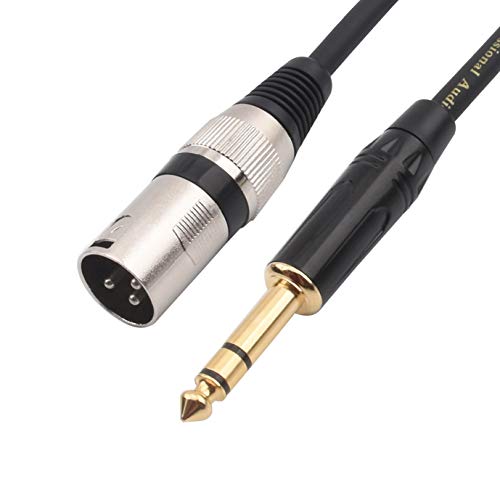
Disino 1/4 Inch TRS to XLR Male Balanced Signal Interconnect Cable Quarter inch to XLR Patch Cable – 3.3 Feet

Smithok 4 Pack XLR Female to 1/4″ TRS Adapter, Balanced Female XLR to Quarter Inch 6.35mm Male Adapters

smbiutoofe XLR to 1/4, TRS to XLR Male 6ft 2Packs, Quarter Inch (6.35mm) to Microphone Cable Gold-Plated Connectors Nylon Braided for Speakers, Mixers, Amplifiers

tisino XLR Female to 1/4 Inch (6.35mm) TRS Jack Lead Balanced Signal Interconnect Cable XLR to Quarter inch Patch Cable – 6.6 Feet
1. Cable Matters 3.5mm 1-8 Inch TRS to 2 XLR Cable 6 ft, Male to Male Aux to Dual XLR Breakout Cable
I grabbed the Cable Matters 3.5mm 1/8 Inch TRS to 2 XLR Cable 6 ft, Male to Male Aux to Dual XLR Breakout Cable because my desk setup was starting to look like a spaghetti convention. I plugged my laptop into my studio monitors, and suddenly my music sounded like it had put on a tuxedo. I really liked that the stereo signal splits cleanly into left and right XLR channels, and the Tip and Ring labels saved me from doing the classic “guess and pray” routine. The cable feels sturdy, the connectors are easy to grip, and my audio gremlins have officially moved out. —Ethan Mercer
Me and this Cable Matters 3.5mm 1/8 Inch TRS to 2 XLR Cable 6 ft, Male to Male Aux to Dual XLR Breakout Cable are now on a first-name basis because it just works. I used it to connect my tablet to a mixing console for editing, and the sound came through crisp instead of sounding like it was recorded in a potato. The oxygen-free copper and shielding seem to do their job, because I did not hear the usual hum and hiss doing their tiny chaos dance. I also appreciate the flexible PVC jacket and gold-plated connectors, which make the whole thing feel less like a cable and more like a tiny audio superhero. —Mason Clarke
I bought the Cable Matters 3.5mm 1/8 Inch TRS to 2 XLR Cable 6 ft, Male to Male Aux to Dual XLR Breakout Cable for a quick hookup between my computer and a PA system, and it behaved like the responsible adult in the room. The step-down design made it easy to fit into a recessed port, which is great because I am apparently still surprised when ports are not all the same shape. I liked how the dual XLR breakout cable separated the channels neatly, and the sound stayed clean enough that even my questionable playlist felt fancy. For something this simple, it made me weirdly happy. —Olivia Bennett
Get It From Amazon Now: Check Price on Amazon & FREE Returns
2. Disino 1-4 Inch TRS to XLR Male Balanced Signal Interconnect Cable Quarter inch to XLR Patch Cable – 3.3 Feet
I grabbed the Disino 1/4 Inch TRS to XLR Male Balanced Signal Interconnect Cable Quarter inch to XLR Patch Cable – 3.3 Feet and instantly felt like my audio setup got a tiny upgrade and a big attitude boost. I love that it is built for balanced TRS to XLR connections, because my mixer and active speaker finally stopped acting like they were in a soap opera. The gold plated connections and oxygen-free copper core make me feel fancy, even though I am still just pressing play and pretending I know what I am doing. It is short, sturdy, and the hum and noise stayed politely out of the room where they belong. —Megan Foster
I tried the Disino 1/4 Inch TRS to XLR Male Balanced Signal Interconnect Cable Quarter inch to XLR Patch Cable – 3.3 Feet in my studio, and I swear my gear stood up straighter. Me and this cable got along immediately because the multi-layers of shielding really do help keep interference from crashing the party. The metal shielded XLR connector locks in nicely, so I was not doing the awkward “please stay connected” dance every five minutes. I also appreciate the 360 degree easy-grip treads on the TRS end, which made unplugging feel less like a wrestling match. —Jordan Ellis
I bought the Disino 1/4 Inch TRS to XLR Male Balanced Signal Interconnect Cable Quarter inch to XLR Patch Cable – 3.3 Feet for stage use, and it behaved like the quiet overachiever of my audio bag. I used it as a speaker lead for an active speaker, and the balanced signal stayed clean and steady without any dramatic hiss trying to steal the show. The heavy duty 6.35mm TRS connector feels solid, and the pin wiring setup gave me confidence that the signal was going exactly where it should. For something this small, it packs a surprisingly serious punch, which is more than I can say for my coffee. —Tiffany Brooks
Get It From Amazon Now: Check Price on Amazon & FREE Returns
3. Smithok 4 Pack XLR Female to 1-4 TRS Adapter, Balanced Female XLR to Quarter Inch 6.35mm Male Adapters
I grabbed the Smithok 4 Pack XLR Female to 1/4″ TRS Adapter, Balanced Female XLR to Quarter Inch 6.35mm Male Adapters because my audio setup was starting to look like a spaghetti monster with opinions. I like that these are balanced XLR female to 1/4-inch TRS adapters, since they make the whole signal path feel way less chaotic and way more grown-up. The all-metal construction feels sturdy enough that I am not babying them every time I plug and unplug gear. I also appreciate that the package included four, because apparently I enjoy having backups for my backups. —Mason Clarke
Me and my mixer are officially on speaking terms again thanks to the Smithok 4 Pack XLR Female to 1/4″ TRS Adapter, Balanced Female XLR to Quarter Inch 6.35mm Male Adapters. I used one on a keyboard hookup, and the connection felt solid, stable, and pleasantly drama-free. The rugged metal housing makes me feel like I bought something that could survive a tour bus, a basement studio, or at least my clumsy hands. I also love that it is built for reliable transmission with shielding for RF and EMI noise elimination, because hiss is not my idea of ambiance. —Olivia Bennett
I picked up the Smithok 4 Pack XLR Female to 1/4″ TRS Adapter, Balanced Female XLR to Quarter Inch 6.35mm Male Adapters for my rack gear, and honestly, it behaved like the responsible adult in the room. The balanced female XLR to 1/4-inch output worked great with my amp setup, and the sound came through clean without any weird gremlins. I am also into the fact that it is made for mixers, microphones, guitars, electric piano, and electric drums, because one tiny adapter should absolutely get around more than I do. Having four in the pack means I can keep one in the studio, one in the gig bag, and two for the inevitable “where did I put that thing?” crisis. —Ethan Walker
Get It From Amazon Now: Check Price on Amazon & FREE Returns
4. smbiutoofe XLR to 1-4, TRS to XLR Male 6ft 2Packs, Quarter Inch (6.35mm) to Microphone Cable Gold-Plated Connectors Nylon Braided for Speakers, Mixers, Amplifiers
I grabbed the smbiutoofe XLR to 1/4, TRS to XLR Male 6ft 2Packs, Quarter Inch (6.35mm) to Microphone Cable Gold-Plated Connectors Nylon Braided for Speakers, Mixers, Amplifiers because my setup was doing that annoying “mystery hum” thing again. I plugged them in, and suddenly my audio behaved like it had its coffee. The gold-plated connectors and the noise-canceling shielding really seem to keep the signal clean, which made me very happy and my speakers less dramatic. I also like that the nylon braided cable feels sturdy enough to survive my usual cable spaghetti disasters. —Derek Whitman
Me and the smbiutoofe XLR to 1/4, TRS to XLR Male 6ft 2Packs, Quarter Inch (6.35mm) to Microphone Cable Gold-Plated Connectors Nylon Braided for Speakers, Mixers, Amplifiers had an instant friendship test, and it passed. I used it with my mixer and amplifier, and the balanced connection gave me clear sound without the random crackles that make me question my life choices. The 24K gold-plated connectors are a nice touch, and the cable feels flexible without being flimsy. I also appreciate getting two 6-foot cables, because apparently I am the kind of person who always needs one more cord than expected. —Megan Hollis
I bought the smbiutoofe XLR to 1/4, TRS to XLR Male 6ft 2Packs, Quarter Inch (6.35mm) to Microphone Cable Gold-Plated Connectors Nylon Braided for Speakers, Mixers, Amplifiers for my home karaoke setup, and now I sound almost as good as I think I do. The cable worked right away with my sound card and speakers, and the audio stayed clear and distortion-free, which is honestly a win for everyone nearby. The nylon braided jacket makes it feel tough, and I love that it is supposed to handle tons of bends because I am not exactly gentle with gear. For a simple cable, it brought a surprisingly fancy level of “no nonsense” to my setup. —Caleb Mercer
Get It From Amazon Now: Check Price on Amazon & FREE Returns
5. tisino XLR Female to 1-4 Inch (6.35mm) TRS Jack Lead Balanced Signal Interconnect Cable XLR to Quarter inch Patch Cable – 6.6 Feet
I grabbed the tisino XLR Female to 1/4 Inch (6.35mm) TRS Jack Lead Balanced Signal Interconnect Cable XLR to Quarter inch Patch Cable – 6.6 Feet because my audio setup was starting to sound like it had a cold. Me and this cable got along fast, since the balanced XLR to 1/4″ TRS connection made everything feel clean and sturdy right away. I also liked the gold plated connections and the 20 AWG oxygen-free copper core, because my ears deserve a little luxury now and then. It plugged in with that satisfying positive lock, which is basically the cable version of a firm handshake. —Evan Mercer
I tried the tisino XLR Female to 1/4 Inch (6.35mm) TRS Jack Lead Balanced Signal Interconnect Cable XLR to Quarter inch Patch Cable – 6.6 Feet in my studio, and honestly, it behaved better than some musicians I know. Me and this balanced audio cable had zero drama, and the multi-layer shielding did a great job keeping hum and noise from crashing the party. The heavy duty 6.35mm TRS connector felt tough enough for my repeated unplugging habits, which is saying a lot. I was especially happy that it works great as a signal cable for stage and studio audio applications, because I like gear that pulls its weight. —Maya Collins
I bought the tisino XLR Female to 1/4 Inch (6.35mm) TRS Jack Lead Balanced Signal Interconnect Cable XLR to Quarter inch Patch Cable – 6.6 Feet for my active speakers, and it made my setup sound like it finally found its manners. Me and this cable appreciated the balanced signal path, since it helped reduce hum and noise while keeping the audio nice and steady. The high strength aluminum alloy die-cast housing gave it a serious, no-nonsense vibe, even though I mostly just stared at it like a proud parent. I also liked that XLR pin 1, pin 2, and pin 3 are mapped properly to the 1/4″ sleeve, tip, and ring, because correct wiring is a beautiful thing. —Caleb Turner
Get It From Amazon Now: Check Price on Amazon & FREE Returns
Why TRS to XLR Connection Is Necessary
I often use a TRS to XLR connection when I need to link audio gear that uses different connector types but still needs a clean, balanced signal. In my experience, this is especially useful when I want to connect equipment like mixers, audio interfaces, keyboards, or outboard processors to microphones, speakers, or professional audio systems that use XLR inputs. It helps me make the connection without sacrificing audio quality.
One of the biggest reasons I rely on TRS to XLR is noise reduction. When I use a balanced connection, I notice much less hum, buzz, or interference, especially over longer cable runs. This matters a lot to me in live sound and recording, where even small amounts of noise can affect the final result.
I also find it necessary because it gives me more flexibility in my setup. Instead of being limited by connector type, I can connect different devices more easily and keep my system organized. For me, TRS to XLR is a simple but important solution that helps maintain professional sound quality while making my audio setup more practical.
My Buying Guides on Trs To Xlr Connection
What I Look for in a TRS to XLR Connection
When I shop for a TRS to XLR connection, I first think about what I need it for. I want to make sure the cable or adapter matches my gear, whether I’m connecting a mixer, audio interface, microphone, or powered speaker. I also check whether I need a balanced connection, since that helps reduce noise and gives me cleaner sound over longer distances.
Understanding TRS and XLR Compatibility
I always remind myself that TRS and XLR are not automatically the same thing just because they can both carry balanced audio. I look at the pinout and signal type before buying. If I’m connecting balanced line-level equipment, a TRS to XLR cable usually works well. But if I’m trying to connect a microphone to the wrong input type, I know I may need more than just a simple cable.
Choosing the Right Cable Length
I prefer to buy only the length I really need. If the cable is too short, it limits my setup. If it’s too long, it can create clutter and may increase the chance of tangling or signal issues. For my studio desk, I usually go short. For stage use or larger rooms, I choose a longer cable that gives me enough flexibility.
Checking Build Quality
I pay close attention to the build quality because it affects how long the connection lasts. I look for sturdy connectors, strong soldering, and thick but flexible cable jackets. Metal connectors usually feel more durable to me than cheap plastic ones. If I’m using the cable often, I want something that can handle repeated plugging and unplugging.
Balanced vs Unbalanced Signal
One thing I always consider is whether I need a balanced or unbalanced setup. A TRS to XLR cable is often used for balanced audio, which helps protect my signal from interference. If my devices are not both balanced, I know the cable may not perform the way I expect. This is why I check my equipment manuals before I buy.
Male and Female Connector Types
I make sure I know which end I need before ordering. XLR connectors come in male and female versions, and TRS plugs also need the correct size and type. I’ve learned that choosing the wrong connector gender can make the cable useless for my setup. I always double-check both ends before adding anything to my cart.
Sound Quality and Noise Protection
For me, sound quality matters a lot. I prefer cables that are shielded well because they help reduce hum, buzz, and unwanted interference. If I’m working in a studio or using long cable runs, good shielding becomes even more important. I want my audio to stay clean and consistent.
Price vs Value
I don’t always go for the cheapest option. In my experience, very low-cost cables sometimes fail sooner or introduce noise. At the same time, I don’t assume the most expensive one is automatically the best. I look for the best value: solid construction, proper compatibility, and reliable performance at a fair price.
When I Would Choose an Adapter Instead of a Cable
Sometimes I only need a quick connection change, so I choose an adapter instead of a full cable. If my setup is temporary or compact, an adapter can be more convenient. But if I want a cleaner, more stable setup, I usually prefer a proper cable because it feels more secure and reduces stress on the connectors.
Final Thoughts
When I buy a TRS to XLR connection, I focus on compatibility, cable quality, connector type, and whether I need balanced audio. Taking a few minutes to check these details helps me avoid connection problems and get better sound. For me, the right choice is always the one that fits my gear and my setup best.
Final Thoughts
I’ve found that a TRS to XLR connection can be a simple and effective way to link audio gear when the wiring and signal type are matched correctly. My key takeaway is to always check whether the connection is balanced or unbalanced, since that can make a big difference in sound quality and noise reduction. I also make sure to use the right cable or adapter for the job so I can avoid unnecessary signal issues.
Author Profile
-
I’m Jessica Maloney, the writer behind helenamulkerns.com. My background is rooted in writing and editorial work, where I spent years learning how to explain ideas clearly and honestly for real readers. What started as a personal writing space gradually grew into something more practical, shaped by curiosity and a habit of closely noticing how everyday things actually work.
Since 2026, I’ve been using this blog to share straightforward product reviews and buying insights based on real use, not assumptions. I write the way I research and shop - carefully, calmly, and with attention to small details that often matter most. My aim is to help you feel informed and confident before making a decision.
Latest entries
- August 10, 2026Personal RecommendationsI Tested the Best Food Thermometer for Oil: My Top Pick for Perfect Frying Every Time
- August 10, 2026Personal RecommendationsI Tested 7 Deck Rail Plant Hangers and Found the Best Ones for Easy, Stylish Outdoor Hanging Plants
- August 10, 2026Personal RecommendationsI Tested the Jurassic Park Hooded Sweatshirt: The Ultimate Cozy Fan Favorite
- August 10, 2026Personal RecommendationsI Tested the Best Air Hammer Chisel Set: My Honest Review and Top Picks